
When Should Kids Start Learning About Money?
If you’ve ever wondered:
👉 “When should I start giving my child an allowance?”
The answer isn’t about age alone — it’s about readiness and structure.
Teaching kids about money early helps them:
- Understand effort and reward
- Build responsibility
- Develop lifelong financial habits
But here’s the key…
👉 Allowance only works when it’s paired with a clear system
Why Most Allowance Systems Fail (And What to Do Instead)

Many families struggle because:
- Money is given randomly
- Chores aren’t clearly defined
- Expectations constantly change
This leads to:
❌ Constant asking for money
❌ Lack of motivation
❌ No real understanding of value
👉 The solution?
A simple structure that connects:
Work → Earn → Get Paid → Manage Money
Step 1: Start with Age-Appropriate Chores (This Comes First)
Before introducing allowance, kids need to understand:
👉 “Money comes from effort”
That starts with giving them clear, age-appropriate responsibilities.
Examples by Age:
Ages 3–5
- Pack away toys
- Help set the table
- Simple tidy-up tasks
Ages 6–9
- Make their bed
- Help with laundry
- Feed pets
Ages 10–15
- Vacuum or mop
- Prepare simple meals
- Manage their own routines
💡 The goal is consistency — not perfection.
🎯 FREE DOWNLOAD: Mastering Age-Appropriate Chores Blueprint
If you’re unsure what chores are appropriate…
👉 This free guide gives you a clear, structured starting point.
Download your FREE Chores Blueprint to:
- Know exactly what chores suit each age
- Create consistent routines at home
- Build responsibility before introducing money
- Avoid overwhelm and guesswork
👉 Download the FREE Mastering Age-Appropriate Chores Blueprint here
Step 2: Introduce Allowance with a Clear System
Once chores are consistent…
👉 Then introduce allowance.
This is where most parents go wrong — they skip structure.
Instead, you need a predictable system:
- Set a weekly payday
- Define what earns money
- Keep expectations consistent
💡 The Missing Piece: A Family Payday System
Allowance works best when it feels like a real system — not random payments.
That’s where a Family Payday structure changes everything.
Instead of:
❌ “Can I have money?”
You create:
✔️ A clear earning system
✔️ A predictable payday routine
✔️ A strong connection between work and reward
🚀 Ready to Introduce Allowance the Right Way?
The Family Payday Agreement Kit helps you:
✔️ Set clear rules around chores and earning
✔️ Introduce a consistent weekly payday
✔️ Reduce arguments around money
✔️ Teach real-world money habits early
💡 This is what turns chores into financial education.
🧾 Family Payday Agreement Kit
👉 Designed for real families who want structure without overwhelm.
Includes:
- Payday setup guide
- Parent-child agreement
- Simple earning system
- Step-by-step implementation
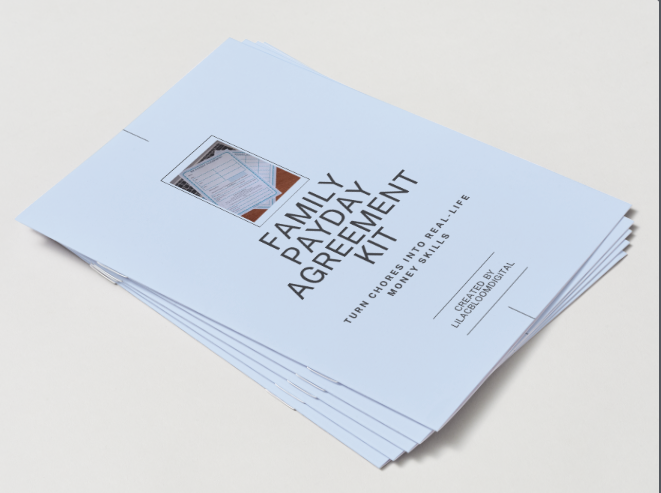
Family Payday Agreement Kit
Limited offer — discounted access available for a short time only. Once spots are filled, the price increases. Start your child’s financial literacy journey today.
Turn everyday chores into real-life money skills with the Family Payday Agreement Kit. This simple, printable system helps kids earn, save, and manage money while building responsibility — without nagging or arguments.
Step 3: Teach Kids What to Do With Their Money
Once kids start earning…
👉 They need to learn how to manage it.
Use a Simple System Like the 4 Jars:
- 💰 Save
- 🛍 Spend
- ❤️ Give
- 📈 Tax
This teaches:
- Balance
- Decision-making
- Long-term thinking
Step 4: Keep It Simple and Consistent
The most successful families don’t overcomplicate it.
They:
- Keep rules clear
- Stick to routines
- Use visual tools
- Stay consistent
💡 Consistency matters more than perfection.
Simple System Recap
If you want your child to succeed with money:
👉 Chores → Earn → Payday → Split → Track
Start Here (Your Action Plan)
✔️ Step 1: Download the FREE Chores Blueprint
✔️ Step 2: Set age-appropriate responsibilities
✔️ Step 3: Introduce a Family Payday system
✔️ Step 4: Teach simple money management
🔗 Helpful Resources
- 🧹 FREE Mastering Age-Appropriate Chores Blueprint – Build the foundation first
- 💰 Family Payday Agreement Kit – Introduce allowance the right way
- 📌 Follow Lilacbloomdigital on Pinterest – Daily tips, printables & family money ideas
Final Thought for Parents
You don’t need complicated systems to teach kids about money.
You need:
- A clear starting point (chores)
- A structured earning system (payday)
- Simple tools to guide them
Start small. Stay consistent.
And watch their confidence grow.