

Want to raise a child who understands money, saves confidently, and makes smart financial decisions?
Most parents aren’t taught how to teach money—and end up relying on trial and error.
The good news?
You don’t need to be wealthy or financially perfect to raise financially capable kids.
You just need a simple, consistent system.
In this guide, you’ll learn:
- The best money management system for kids (ages 5–18)
- How to use the 4-jar method
- When to introduce an allowance (and how to do it properly)
- How to build real-life money habits early
Why Teaching Kids About Money Early Matters
Teaching kids about money isn’t just about saving coins—it’s about building:
- Decision-making skills
- Delayed gratification
- Responsibility
- Confidence with money
The earlier kids start, the easier it is to build lifelong habits.
👉 Habits formed young = fewer money struggles later.
The Best Money Management System for Kids (Ages 5–12)
The 4-Jar Money System for Kids
The simplest and most effective way to teach money is the 4-jar method.
1. Spending Jar
Used for everyday purchases (toys, treats).
✔ Teaches:
- Decision-making
- Wants vs needs
- Budgeting small amounts
2. Saving Jar
Used for bigger goals (bike, game, special item).
✔ Teaches:
- Patience
- Goal setting
- Delayed gratification
3. Giving Jar
Used for donations or helping others.
✔ Teaches:
- Gratitude
- Generosity
- Social awareness
4. Tax (Responsibility) Jar
A small portion set aside for responsibilities.
✔ Teaches:
- Real-world money concepts
- Contribution
- Financial awareness
How to Make the 4-Jar System Actually Work
Most systems fail because they’re inconsistent.
Here’s how to make it stick:
- Let kids decorate their jars (ownership matters)
- Keep it visual (watch money grow)
- Be consistent with money coming in
- Talk about money regularly (this is key)
FREE DOWNLOAD: Teach Your Child to Save (Without Stress)
Want a done-for-you system to get started?
👉 Download your FREE SMART Goal + Savings Plan for Kids
Inside you’ll get:
- Simple goal-setting worksheets
- Savings tracker
- Step-by-step guide for parents
Should You Give Kids an Allowance?
Short answer: Yes—if it’s structured properly.
An allowance turns money lessons into real-life practice.
Without it, money stays theoretical.
The Problem With Traditional Allowances
Most families:
- Give money randomly
- Tie it loosely to chores
- Don’t teach what to do with money
Result? Kids spend everything.
The Better Approach: Work → Earn → Allocate → Grow
This is where your system becomes powerful.
Instead of just giving money, teach:
- Work (chores or contributions)
- Earn (income comes in)
- Allocate (split into jars)
- Grow (saving + future thinking)
Want a Complete System?
If you want to skip the guesswork…
👉 The Family Payday Agreement Kit gives you:
- A structured allowance system
- Clear expectations (no arguments)
- Printable agreements + trackers
- A step-by-step framework to teach real money skills
✔ Designed for ages 5–12
✔ Turns chores into life skills
✔ Builds responsibility without constant reminders
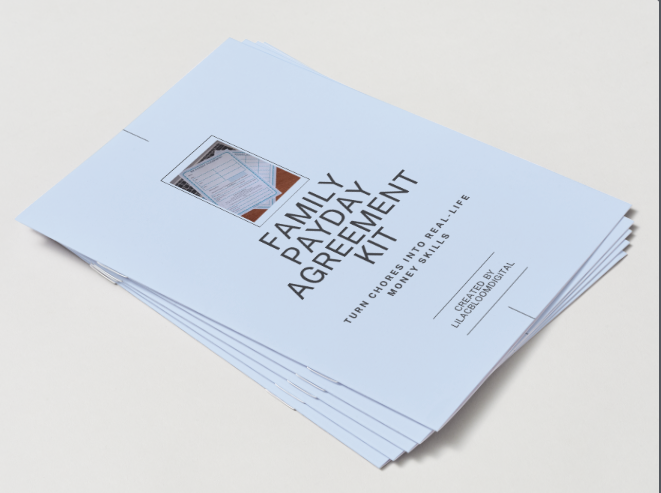
Family Payday Agreement Kit
Limited offer — discounted access available for a short time only. Once spots are filled, the price increases. Start your child’s financial literacy journey today.
Turn everyday chores into real-life money skills with the Family Payday Agreement Kit. This simple, printable system helps kids earn, save, and manage money while building responsibility — without nagging or arguments.
How Money Systems Grow With Your Child (Ages 13–18)
As kids get older, their system should evolve.
Instead of jars, introduce categories:
- Spending
- Short-term savings
- Long-term savings
- Emergency fund
- Investing basics
This prepares them for:
- Real budgeting
- Bills and expenses
- Financial independence
Common Mistakes Parents Make
Avoid these:
❌ Waiting too long to start
❌ Giving money without structure
❌ Not talking about money
❌ Expecting kids to “just learn”
Final Thoughts: Start Simple, Stay Consistent
You don’t need a perfect system.
You just need a simple one that you stick to.
Start with:
✔ The 4-jar system
✔ A basic allowance structure
✔ Open conversations about money
Over time, these small steps create financially confident kids.
👉 Start today with your FREE Kids Savings & Goal Guide
👉 Then upgrade to the Family Payday Agreement Kit when you’re ready for a complete system
Blog Recommendations
- Stop Wishful Thinking: Why SMART Goals Are Your Teen’s Financial Superpower
- Building a Chore Scoreboard: How to Teach Kids to Earn & Manage Money (Step-by-Step Guide)
- From Piggy Banks to Paychecks: How to Set Up a Successful Allowance System for Your Kids