
Want to teach your child about money but don’t know where to start?
You’re not alone.
Most parents were never taught how to explain money in a kid-friendly way — which is why concepts like saving, budgeting, and smart spending can sometimes feel overwhelming to teach.
But here’s the good news:
You do NOT need to be a financial expert to raise financially confident kids.
You simply need:
✔ simple explanations
✔ real-life examples
✔ consistent conversations
This guide will walk you through the most important money concepts for kids in a simple, easy-to-understand way — plus you can download a FREE printable Money Concepts Guide to use at home.
📥 FREE PRINTABLE: Money Concepts for Kids Guide

Want a done-for-you version of these concepts?
👉 Download the FREE Money Concepts for Kids Guide
Inside you’ll get:
✔ Kid-friendly money definitions
✔ Printable reference pages
✔ Conversation starters
✔ Simple money activities
✔ Financial literacy concepts explained simply
Perfect for ages 5–12.
🧠 Why Teaching Money Concepts Early Matters
Children begin forming money habits much earlier than most parents realize.
When kids understand basic financial literacy concepts early, they’re more likely to:
✅ Make smarter spending choices
✅ Develop patience and self-control
✅ Build confidence with money
✅ Understand responsibility
✅ Avoid unhealthy money habits later in life
The goal isn’t perfection.
The goal is helping children slowly build confidence and understanding through everyday experiences.
🚨 The Hidden Cost of NOT Teaching Money Concepts Early
Without simple money education, many children grow into adults who:
- struggle with impulse spending
- avoid budgeting
- feel anxious about money
- don’t understand saving
- rely heavily on debt
Financial literacy starts with small conversations.
Even simple lessons like:
- “needs vs wants”
- saving before spending
- setting goals
- delayed gratification
Can create lifelong habits over time.
📚 10 Essential Money Concepts for Kids
Here are some of the most important money concepts every child should begin learning.
💵 1. Money
Simple Definition:
Money is something we use to buy things we need or want.
Parent Example:
“Money helps us trade for things like food, clothes, and toys.”
🛠️ 2. Earning
Simple Definition:
Earning means getting money for work, helping, or effort.
Example:
“You earned money by helping wash the car.”
Real-Life Practice:
- chores
- lemonade stands
- helping neighbors
- selling crafts
🛍️ 3. Spending
Simple Definition:
Spending means using money to buy something.
Parent Tip:
Before buying, ask:
👉 “Do you really want this?”
👉 “Will you still want it tomorrow?”
These small questions help children think before spending.
🏦 4. Saving
Simple Definition:
Saving means keeping money for later instead of spending it right now.
Example:
“You’re saving for something bigger in the future.”
Why It Matters:
Saving helps children:
- build patience
- prepare for goals
- avoid impulse spending
🎯 5. Financial Goals
Simple Definition:
A financial goal is something you are saving money for.
Example:
“Saving $50 for a scooter is a financial goal.”
Parent Tip:
Goals help children:
- stay motivated
- track progress
- practice consistency
⚖️ 6. Needs vs Wants
Simple Definition:
Needs are things we must have.
Wants are things we would like to have.
Examples:
✅ Food = need
✅ Water = need
🎮 Video game = want
🍬 Candy = want
Teaching this concept early helps children become more thoughtful spenders.
⏳ 7. Delayed Gratification
Simple Definition:
Delayed gratification means waiting before buying something.
Example:
Your child could:
🍬 buy candy today
OR
🚲 save for a bigger reward later
Why It Matters:
Children who practice delayed gratification often develop:
- stronger patience
- better saving habits
- improved self-control
🧾 8. Budgeting
Simple Definition:
A budget is a plan for how to use money.
Kid-Friendly Example:
If your child gets $10:
- save $5
- spend $3
- give $2
Budgeting helps kids understand:
👉 money has different purposes
👉 not all money is for spending
❤️ 9. Giving
Simple Definition:
Giving means helping others using money, time, or kindness.
Examples:
- donating toys
- helping fundraisers
- giving gifts
- supporting charities
Giving teaches empathy and generosity alongside financial literacy.
🌱 10. Investing
Simple Definition:
Investing means using money to help grow more money over time.
Kid-Friendly Example:
Planting a seed today can grow into a tree later.
Simple Investing Lessons:
- small amounts grow over time
- patience matters
- saving early helps
💡 How to Teach Money Concepts Without Overwhelm
You do NOT need complicated lessons.
Children learn best through everyday moments.
Try using simple conversations during normal activities:
At the Shops
“Is this a need or a want?”
During Allowance
“How much should we save first?”
Before Buying Something
“Would you rather buy this now or save for something bigger?”
During Grocery Shopping
“Which option gives us better value?”
The key is:
👉 keep it simple
👉 keep it consistent
👉 make it practical
🧩 Make Money Lessons Practical: The 4-Category System
One of the easiest ways to teach financial literacy is using simple money categories.
Try teaching children to divide money into:
💰 Spend
🐷 Save
❤️ Give
🧾 Tax
This helps children understand:
- money has different jobs
- saving matters
- giving matters
- spending needs limits
📥 FREE DOWNLOAD: Money Concepts for Kids Printable Guide
Want an easy, done-for-you version of these concepts?
👉 Download the FREE Money Concepts for Kids Guide
Inside you’ll get:
✔ Kid-friendly definitions
✔ Printable reference sheets
✔ Simple activities
✔ Money conversation starters
✔ Real-life money examples
Perfect for:
- parents
- homeschool families
- classrooms
- beginner financial literacy lessons
🚀 Ready for the NEXT Step?
Understanding money concepts is the first step.
But here’s what many parents notice next:
👉 Kids understand money… but struggle to APPLY it consistently.
That’s because children need:
- systems
- routines
- hands-on practice
Not just knowledge.
💰 The Family Payday Agreement Kit
The Family Payday Agreement Kit helps turn money lessons into real-life habits through a simple structured system.
It helps children practice:
✅ earning
✅ budgeting
✅ saving
✅ spending responsibly
✅ money management routines
Instead of constantly asking for money, children begin learning:
👉 how money works in everyday life.
Simple system:
Work → Earn → Payday → Allocate → Grow
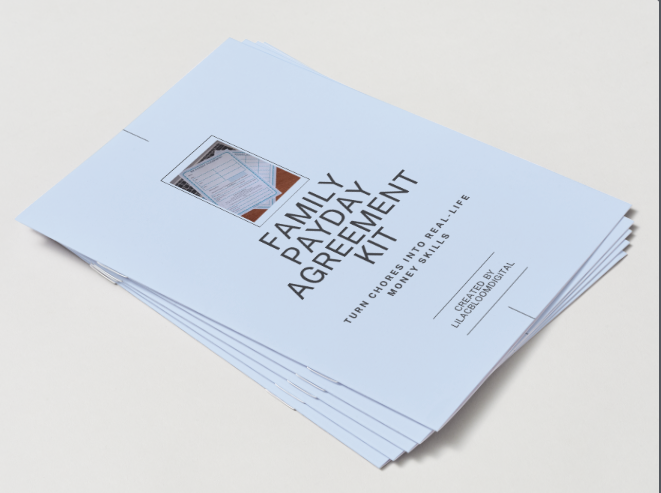
Family Payday Agreement Kit
Limited offer — discounted access available for a short time only. Once spots are filled, the price increases. Start your child’s financial literacy journey today.
Turn everyday chores into real-life money skills with the Family Payday Agreement Kit. This simple, printable system helps kids earn, save, and manage money while building responsibility — without nagging or arguments.
❓FAQ: Money Concepts for Kids
What age should kids learn about money?
Children can begin learning simple money concepts as early as ages 3–5 through play and everyday conversations.
What are the most important money concepts for kids?
Saving, spending, budgeting, earning, delayed gratification, and goal setting are some of the most important early concepts.
How do you explain budgeting to a child?
A budget is simply a plan for where money goes before it gets spent.
How can parents teach financial literacy naturally?
Use real-life moments like shopping, saving goals, allowance, and family budgeting conversations.
🧠 Final Thoughts
Teaching kids about money doesn’t need to feel complicated.
Start with:
✔ simple conversations
✔ real-life examples
✔ small habits practiced consistently
Over time, these small lessons can grow into lifelong financial confidence.
The earlier children learn healthy money habits, the more prepared and confident they can become in the future.
📥 Don’t forget to download the FREE Money Concepts for Kids Guide to start practicing these lessons at home today.