
Why Allowance Is One of the Best Ways to Teach Kids About Money

If you want your child to understand money…
👉 They need money to manage
That’s why allowance is so powerful.
When used correctly, allowance becomes:
- A real-life learning tool
- A hands-on budgeting system
- A way to teach responsibility
In fact, giving kids an allowance helps them learn budgeting, saving, and decision-making through real experience—not just theory
But Here’s the Important Part Most Parents Miss
Allowance alone isn’t enough.
If money is:
❌ Random
❌ Given without structure
❌ Not connected to responsibility
👉 It can actually create entitlement instead of financial skills.
💡 The Solution: A Structured Allowance System
To truly teach money skills, your child needs a system:
👉 Work → Earn → Get Paid → Manage Money
This is what transforms allowance into:
✔️ Financial education
✔️ Real-life experience
✔️ Confidence with money
Step 1: Connect Allowance to Effort (The Foundation)
Children need to understand:
👉 Money comes from effort
This can be done through:
- Age-appropriate chores
- Consistent expectations
- Clear responsibilities
💡 When allowance is linked to effort, kids begin to understand the real-world connection between work and income.
Step 2: Teach Kids What to Do With Their Money (The 4 Jar System)
Once your child receives money…
👉 The next step is teaching them how to manage it.
One of the most effective ways to do this is the 4 Jar Money Management System.
This system turns money into something kids can see, touch, and understand, making abstract concepts like budgeting much easier to grasp
🏦 The 4 Jar Money System Explained (Simple Debrief for Parents)
💸 1. Spending Jar (Short-Term Choices)
This is your child’s fun money.
Used for:
- Toys
- Treats
- Small purchases
What it teaches:
- Decision-making
- Trade-offs
- That money runs out
👉 Kids quickly learn: If it’s gone, it’s gone.
💰 2. Savings Jar (Goal Setting & Patience)
This jar is for bigger goals.
Used for:
What it teaches:
- Expensive toys
- Games
- Special purchases
- Delayed gratification
- Goal setting
- Planning ahead
👉 This is where confidence builds: “I saved for this.”
❤️ 3. Giving Jar (Building Generosity)
This jar focuses on others.
Used for:
- Donations
- Gifts
- Helping others
What it teaches:
- Empathy
- Gratitude
- Social responsibility
👉 Kids learn money isn’t just for themselves.
🧾 4. Tax Jar (Real-World Awareness)
This is where your system stands out.
Used for:
- A small percentage taken each payday
- Can be reinvested, saved, or used for family costs
What it teaches:
- Real-world financial systems
- That income isn’t fully “take-home”
- Early understanding of taxes
💡 This builds awareness most adults only learn much later.
Why the Jar System Works So Well
The power of this system is simple:
👉 It makes money visible and tangible
Instead of numbers on a screen, kids:
- Physically divide money
- See their progress
- Make real decisions
This hands-on approach helps children understand budgeting and priorities much earlier
🚀 Want to Set This Up Without the Stress?
This is where most parents get stuck:
- How much to pay?
- What chores count?
- How to stay consistent?
💰 Family Payday Agreement Kit (Your Done-for-You System)
Instead of figuring it all out yourself…
👉 Use a simple, structured system already designed for families.
The Family Payday Agreement Kit helps you:
✔️ Define chores and expectations
✔️ Set a clear payday routine
✔️ Introduce the 4 jar system step-by-step
✔️ Keep everything consistent (no arguments)
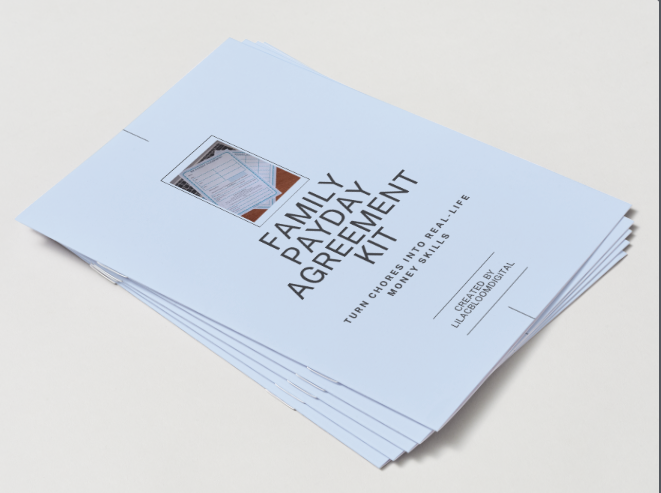
Family Payday Agreement Kit
Limited offer — discounted access available for a short time only. Once spots are filled, the price increases. Start your child’s financial literacy journey today.
Turn everyday chores into real-life money skills with the Family Payday Agreement Kit. This simple, printable system helps kids earn, save, and manage money while building responsibility — without nagging or arguments.
Step 3: Keep It Consistent (This Is What Builds Habits)
The families who succeed with allowance:
- Stick to a regular payday
- Keep rules clear
- Avoid changing expectations
💡 Consistency builds habits — not perfection.
Simple System Recap
If you want your child to succeed with money:
👉 Work → Earn → Payday → Split into Jars → Learn
Start Here (Action Plan for Parents)
✔️ Step 1: Introduce age-appropriate chores
✔️ Step 2: Start a simple weekly allowance
✔️ Step 3: Use the 4 jar system
✔️ Step 4: Keep it consistent
✔️ Step 5: Use a structured payday system
🔗 Helpful Resources
- 🧹 Mastering Age-Appropriate Chores Blueprint (Free) – Start with responsibility first
- 💰 Family Payday Agreement Kit – Set up your full allowance system
- 📌 Follow Lilacbloomdigital on Pinterest – Daily tips & money systems for kids
Final Thought
Allowance isn’t about giving kids money.
👉 It’s about giving them the skills to manage it
And when you combine:
- Structure
- Consistency
- Simple systems
You’re not just giving pocket money…
👉 You’re raising financially capable adults.