
Teaching kids about money shouldn’t wait until they leave home. The allowance isn’t just a handout; it’s a safe, small-scale simulation of adult financial life. Structured correctly, it teaches budgeting, earning, and delayed gratification without the stress of real-world consequences.
This post will detail why introducing a formal allowance is critical, how to set it up like a real job, and introduce the powerful Four-Jar Money Management System that sets kids up for life.
Why Allowance is Your Child’s First Financial Classroom

Introducing a consistent allowance, especially one tied to real-world expectations, is the single best way to teach financial literacy early.
The Core Benefits of an Allowance
- Teaches Value and Effort: Tying money to effort through a chore chart teaches the foundational lesson that money is earned, not simply given (the “Earned” or “Combined” model is highly recommended).
- Develops Decision-Making: When they have their own money, they have to decide: Is this new toy worth spending my savings on? This builds confidence and ownership over their choices.
- Fosters Responsibility: They learn to budget for their own wants. When they run out of spending money, it’s a natural consequence, not a parental lecture.
- Promotes Delayed Gratification: Saving up for a big purchase over several weeks or months teaches them to wait for what they want, a key predictor of adult financial success.
Implementing Allowance: The Real-World Payday System
To prevent allowance from feeling like an entitlement, structure it like a job with clear expectations and a regular “payday.”
1. The Payday Agreement
This is your child’s first contract! Sit down and formally discuss the terms:
- The Amount: Determine a sustainable weekly or bi-weekly amount based on your budget and their age/needs.
- The Expectations: Clearly define which purchases the allowance will cover (e.g., specific toys, movie tickets, apps) so they can budget for them.
- The Paycheck: Set a fixed “payday” (e.g., Friday evening). Consistency is key to teaching reliability.
2. The Chore Chart Scoreboard
Use a Chore Chart or Scoreboard to visually track responsibilities and link effort to the allowance.
- Mandatory vs. Earning Chores: Separate the two.
- Mandatory: Basic life tasks that are part of being a family member (e.g., making their bed, cleaning their room). These are done out of responsibility and are not paid.
- Earning Chores: Extra tasks that go above and beyond their daily responsibility (e.g., washing the car, weeding the garden). These tasks earn the agreed-upon allowance amount.
- Why a Scoreboard is Essential: It’s a visible record. Kids can clearly see their progress throughout the week, increasing accountability and providing motivation before payday.
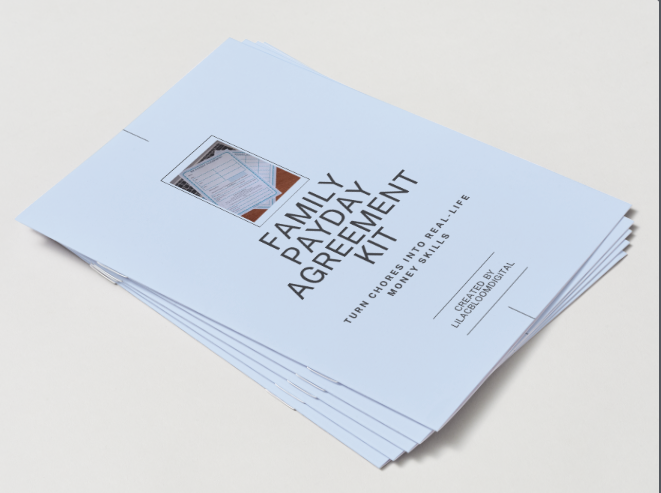
Family Payday Agreement Kit
Limited offer — discounted access available for a short time only. Once spots are filled, the price increases. Start your child’s financial literacy journey today.
Turn everyday chores into real-life money skills with the Family Payday Agreement Kit. This simple, printable system helps kids earn, save, and manage money while building responsibility — without nagging or arguments.
The Four-Jar Money Management System
This system is the most powerful tool you can introduce, as it teaches the four core functions of money simultaneously:
Implement a physical system using four clear jars, envelopes, or separate labeled digital accounts.
1. 💼 Tax (or Future/Long-Term Saving)
- The Goal: To simulate taxes and teach the concept of money being taken out before you get to spend it. As they get older, this can transition into a long-term fund (college, first car, etc.).
- Action: Immediately allocate 10% of their allowance here.
2. 🛍️ Spending (or Short-Term Goals)
- The Goal: To cover immediate wants and short-term purchases (toys, snacks, entertainment). This is where they learn to manage scarcity.
- Action: Allocate the largest portion here, typically 50-60%.
3. 🏦 Saving (The Wealth Builder)
- The Goal: To save for medium-term goals (e.g., a new game console, concert tickets). This jar reinforces delayed gratification and compound interest (if you offer a small “parent match” incentive).
- Action: Allocate 20% here.
4. 🎁 Giving (The Generosity Jar)
- The Goal: To teach philanthropy and empathy. The money can go towards a charity, a birthday gift for a sibling, or a community project.
- Action: Allocate 10-20% here.
Ready to Make This Stick for Your Child?
Check out the Ultimate Tracking System
You’ve just learned how to turn pocket money into real savings habits…
But here’s the truth:
👉 Kids don’t stay consistent without something they can see and use.
That’s where this comes in 👇
💰 Allowance Tracker for Kids (Ages 5–12)
A simple, visual system that helps your child:
- Track their money (without confusion)
- See their savings grow (this is the game-changer)
- Build real habits — not just hear about them
✔ No overwhelm
✔ Takes 5 minutes a week
✔ Designed for real families
👉 Turn today’s lesson into a lasting habit
Get the Allowance Tracker here →