Disclosure: This post may contain affiliate links, which means I may receive a commission if you make a purchase through these links at no extra cost to you.
As a parent and a professional social worker, I’ve read countless books on child development and mental health. Many are informative, but only a few genuinely shift the way you think, reflect, and parent.
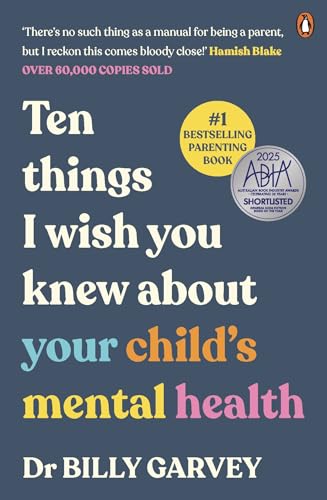
Ten Things I Wish You Knew About Your Child’s Mental Health by Dr. Billy Garvey is one of those rare books.
This book clearly outlines 10 key aspects that can significantly impact a child’s mental health, but what makes it stand out is how deeply it connects a child’s wellbeing to the parent’s emotional health, awareness, and regulation. It’s not a book about “fixing” children — it’s a book about understanding them, while also understanding yourself.
My Personal Review & Reflection

While reading this book, I found myself reflecting not only on my parenting, but on my own childhood experiences. Growing up with an almost non-existent emotional attachment to my family had a lasting impact on my sense of identity and belonging. Those feelings don’t just disappear in adulthood — they often resurface in parenting, relationships, and emotional regulation.
What I appreciated most about Dr. Garvey’s approach is that he doesn’t shame parents for what they didn’t know or couldn’t provide. Instead, he gently but honestly highlights how our own mental health, emotional awareness, and unresolved experiences directly influence how we show up for our children.
This book reinforced something I strongly believe:
👉 We cannot fully support our child’s mental health if we are not also tending to our own.
Rather than feeling overwhelming, this message felt empowering. It reminded me that breaking generational patterns doesn’t require perfection — it requires awareness, willingness, and intention. This book has become a meaningful resource in my commitment to creating a secure, emotionally safe environment for my children — one that I personally wish I had growing up.
5 Profound Insights I Gained from the Book
The true strength of this book lies in its ability to translate psychological concepts into real-life parenting moments. Here are five insights that genuinely shifted my perspective:
1. Parental Mental Health Shapes the Home Environment
Dr. Garvey clearly explains that a child’s emotional world is deeply influenced by the emotional climate of the home. When parents are overwhelmed, dysregulated, or unsupported, children often absorb that stress — even when nothing is explicitly said.
2. Self-Esteem Shows Up in Different Ways
Low self-esteem doesn’t always look like sadness or withdrawal. For some children, it can present as perfectionism, people-pleasing, anxiety, or constant overachievement. Understanding these differences allows parents to respond with compassion rather than pressure.
3. Children Experience Grief in Many Forms
The book highlights that grief isn’t limited to death. Children can grieve changes such as moving schools, family separation, loss of friendships, or changes in routine. Validating these experiences helps children feel emotionally seen rather than dismissed.
4. Parenting Styles Have Long-Term Mental Health Impacts
Dr. Garvey explains how authoritarian, permissive, authoritative, and neglectful parenting styles influence emotional development, coping skills, and future relationships. This section prompted deep self-reflection about the balance between structure and emotional safety.
5. Emotional Regulation Is Learned Through Observation
Children learn how to manage emotions by watching how adults manage theirs. How we handle frustration, stress, conflict, and even joy becomes their emotional blueprint — a powerful reminder that regulation starts with us.
7 Key Benefits of Reading This Book
This book equips parents with insight, awareness, and practical strategies to support their child’s mental health proactively.
- Simplifies Complex Mental Health Topics
Anxiety, depression, emotional regulation, and behavioural challenges are explained in clear, relatable language. - Encourages Parent Self-Awareness
The book consistently brings the focus back to the parent’s emotional wellbeing — without blame or judgement. - Strengthens Parent–Child Attachment
It provides guidance on emotional responsiveness and connection, helping build secure attachments. - Improves Communication & Social Understanding
Parents gain tools to support children through friendships, conflict, and emotional expression. - Promotes Healthy Emotional Boundaries
It teaches how to support children without absorbing or dismissing their emotions. - Offers Practical, Actionable Strategies
This isn’t just theory — the book provides real-world approaches parents can apply immediately. - Supports Long-Term Emotional Resilience
By addressing mental health early, parents help children develop coping skills that last into adulthood.
Final Thoughts
If you are a parent who wants to break generational cycles, strengthen emotional connection, and better understand how mental health develops in children, Ten Things I Wish You Knew About Your Child’s Mental Health by Dr. Billy Garvey is an invaluable read.
This book doesn’t demand perfection — it encourages growth, reflection, and compassion. It reminds us that when we care for our own mental health, we are better equipped to raise emotionally resilient, secure children.
Ready to Support Your Child’s Mental Health—Starting With You?
If this post resonated with you, I encourage you to take the next step and read
Ten Things I Wish You Knew About Your Child’s Mental Health by Dr. Billy Garvey.
This book isn’t about being a perfect parent — it’s about becoming a more aware, emotionally present one. Whether you’re navigating big emotions, behavioural challenges, or simply want to raise emotionally resilient children, this book offers insight, reassurance, and practical strategies you can apply immediately.
👉 Click here to get your copy and start building a stronger emotional foundation for your child and your family.
And if you’re on a journey of intentional parenting, emotional awareness, and breaking generational cycles, I invite you to:
- Explore more parenting and mental health resources on the blog
- Save this post to come back to later
- Share it with another parent who may need this reminder today
Supporting your child’s mental health doesn’t start with having all the answers — it starts with awareness, compassion, and willingness to grow.