
Teenagers are closer to adulthood than many parents realise.
In just a few short years, they may be:
- Getting their first job
- Paying bills
- Managing bank accounts
- Using debit or credit cards
- Budgeting for rent, fuel, or groceries
- Making major financial decisions independently
Yet many teens leave school without learning the practical money skills needed for real life.
That’s why financial education at home matters.
Teaching teenagers about money before adulthood can help them build:
✔ Confidence
✔ Responsibility
✔ Independence
✔ Financial awareness
✔ Long-term money habits
In this guide, you’ll learn practical ways to prepare your teenager financially for adulthood — without making money conversations overwhelming.
Why Financial Literacy for Teens Matters

Many adults struggle financially not because they lack intelligence — but because nobody taught them how money works.
Without financial education, teenagers may enter adulthood without understanding:
- Budgeting
- Saving
- Debt
- Taxes
- Credit cards
- Needs vs wants
- Delayed gratification
- Investing
- Financial responsibility
The earlier teens begin practicing money management, the more confident they become making real-world financial decisions.
Financial literacy is not just about money.
It’s about preparing teenagers for independence.
1. Teach Teens How to Budget
Budgeting is one of the most important life skills teenagers can learn.
A budget teaches teens:
- Where money goes
- How to prioritise spending
- How to avoid overspending
- How to plan ahead
Simple Teen Budget Categories
Start with:
- Saving
- Spending
- Giving
- Bills or responsibilities
- Long-term goals
You can help teens create a simple weekly or monthly budget based on:
- Allowance
- Part-time job income
- Gift money
- Side hustles
The goal isn’t perfection.
The goal is awareness.
2. Encourage Saving for Real Goals
Teenagers are more motivated to save when the goal feels meaningful.
Examples:
- First car
- Gaming console
- New phone
- Travel
- University expenses
- Emergency fund
Instead of constantly buying things for teens, encourage them to:
- Set savings targets
- Calculate how long saving will take
- Track progress visually
This teaches:
✔ Delayed gratification
✔ Goal setting
✔ Patience
✔ Financial discipline
3. Help Teens Understand Needs vs Wants
One of the biggest financial habits teens need before adulthood is learning the difference between:
- Essential expenses
- Emotional spending
A great question to teach teens:
“Do I need this right now, or do I simply want it?”
This simple mindset shift helps reduce:
- Impulse spending
- Emotional purchases
- Financial regret
It also encourages intentional spending habits that become valuable in adulthood.
4. Introduce Teens to Banking Basics
Before adulthood, teenagers should understand:
- How bank accounts work
- Debit cards
- Interest
- Online banking
- Savings accounts
- Automatic transfers
- Bank fees
Practical learning ideas:
- Open a youth savings account
- Help them monitor balances
- Set up automatic savings transfers
- Review transactions together
Hands-on experience builds confidence far faster than lectures.
5. Teach Teens About Earning Money
Financial responsibility becomes more meaningful when teens earn their own money.
Ways teenagers can earn:
- Part-time jobs
- Babysitting
- Lawn mowing
- Tutoring
- Pet sitting
- Selling handmade items
- Online freelance skills
Earning teaches:
✔ Work ethic
✔ Time management
✔ Effort-to-income connection
✔ Appreciation for money
Teens who earn money often become more thoughtful spenders.
6. Discuss Debt and Credit Cards Early
Many young adults enter debt because they never learned how borrowing works.
Before adulthood, teens should understand:
- Credit cards are borrowed money
- Interest increases debt quickly
- “Buy now, pay later” still creates repayment obligations
- Minimum repayments can trap people financially
You don’t need to scare teens about debt.
Instead, teach:
- Responsible borrowing
- Financial consequences
- Long-term thinking
Early awareness helps teens avoid expensive mistakes later.
7. Teach Basic Tax and Payslip Understanding
When teens get their first job, payslips can feel confusing.
Teach them:
- Gross pay vs net pay
- Tax deductions
- Superannuation
- Hourly rates
- Budgeting from actual take-home pay
Simple financial conversations now can reduce confusion and anxiety later.
8. Encourage Delayed Gratification
One of the strongest predictors of future financial success is delayed gratification.
In simple terms:
- learning not to spend immediately
Teens who practice waiting, saving, and planning often build stronger financial habits long-term.
You can encourage this by:
- Helping them compare options before buying
- Creating savings challenges
- Setting larger financial goals
- Avoiding instant replacements for every want
9. Introduce Basic Investing Concepts
Teenagers don’t need advanced investing knowledge yet.
But they should understand:
- Money can grow over time
- Compound interest matters
- Long-term investing builds wealth
- Small consistent habits create big future outcomes
Simple beginner concepts:
- Savings interest
- Investment basics
- Long-term thinking
- Passive income ideas
The goal is building financial curiosity.
10. Build Financial Confidence — Not Fear
Many teens grow up hearing:
- “Money is stressful”
- “We can’t afford anything”
- “Money causes problems”
Instead, try building a healthier money mindset:
- Money is a tool
- Skills can improve finances
- Mistakes are learning opportunities
- Financial habits matter more than perfection
Confidence helps teenagers approach adulthood feeling capable instead of fearful.
Practical Financial Skills Every Teen Should Know Before Adulthood
By age 18, teenagers should ideally understand:
✔ Budgeting basics
✔ Saving habits
✔ Banking systems
✔ Tax basics
✔ Goal setting
✔ Needs vs wants
✔ Smart spending
✔ Earning income
✔ Delayed gratification
✔ Basic investing concepts
These skills create a strong foundation for adulthood.
Free Resource: Mastering Age-Appropriate Chores Blueprint
Financial literacy starts long before the teenage years.
The earlier children learn responsibility and contribution, the easier money conversations become later.
Download the FREE guide here:
Mastering Age-Appropriate Chores Blueprint
Inside you’ll learn:
✔ Age-appropriate responsibilities
✔ Independence-building strategies
✔ Early money habit foundations
✔ Practical life skills for kids
Continue Teaching Financial Responsibility at Home
Family Payday Agreement Kit
The Family Payday Agreement Kit helps families connect:
- Responsibility
- Earning
- Saving
- Budgeting
- Accountability
Through a simple structured system designed for real-life learning.
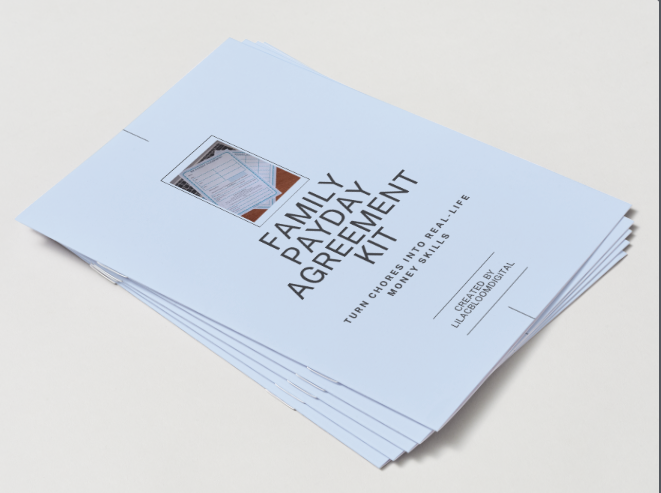
Family Payday Agreement Kit
Limited offer — discounted access available for a short time only. Once spots are filled, the price increases. Start your child’s financial literacy journey today.
Turn everyday chores into real-life money skills with the Family Payday Agreement Kit. This simple, printable system helps kids earn, save, and manage money while building responsibility — without nagging or arguments.
Help Teens Track Their Money Goals
The Allowance Tracker & Blueprint System helps older kids and teens:
✔ Track spending
✔ Monitor savings goals
✔ Build budgeting habits
✔ Develop financial awareness
✔ Practice money management visually
Final Thoughts
Preparing teenagers financially for adulthood isn’t about creating perfect savers.
It’s about helping them become:
- Aware
- Responsible
- Confident
- Independent
The small money habits teens learn today can shape their future for decades to come.
Because one day, your teenager will become an adult making financial decisions on their own.
And the lessons you teach now may become the foundation they build their future on.