
Should kids get an allowance… or earn money through chores?
It’s one of the most common questions parents ask when teaching financial literacy.
And the truth is — most advice online is confusing, conflicting, or unrealistic for everyday families.
So let’s simplify it.
In this guide, we’ll break down:
- The pros and cons of allowance vs chores
- What actually works in real life
- A simple system that combines the best of both
🧠 What Is an Allowance?

An allowance is money given to a child regularly (weekly or fortnightly), sometimes regardless of chores.
✅ Pros of Allowance
- Teaches consistency
- Helps kids learn budgeting
- Provides predictable money to manage
❌ Cons of Allowance
- Can feel “expected” rather than earned
- Kids may disconnect money from effort
- Less motivation to contribute
🛠️ What Are Chores for Money?
This is when kids earn money by completing tasks.
✅ Pros of Chores-Based Pay
- Teaches work → earn connection
- Builds responsibility
- Encourages effort
❌ Cons of Chores-Based Pay
- Can lead to negotiating or refusing tasks
- Kids may expect payment for everything
- Less consistency with income
⚖️ The Real Problem With This Debate
Most parents think they need to choose:
👉 Allowance or chores
But that’s where things break down.
Because in real life:
- Adults earn money (work)
- But also have responsibilities (unpaid tasks)
👉 Kids need to learn both.
💡 What Actually Works: A Hybrid Approach
The most effective system combines:
1. Non-Negotiable Chores (Unpaid)
These are part of being in a family:
- Making their bed
- Packing school bags
👉 Teaches responsibility (not everything is paid)
2. Paid Opportunities (Earn Money)
Extra tasks earn money:
- Washing the car
- Extra cleaning
- Helping with bigger jobs
👉 Teaches earning and effort
3. Structured “Payday” System
Instead of random payments:
Create a consistent routine:
- Weekly payday
- Clear expectations
- Money gets allocated (spend/save/give)
👉 This is where habits are built.
🧩 Why This System Works
It teaches kids:
✔ Responsibility (chores without pay)
✔ Earning (extra work = money)
✔ Money management (what they do with money)
👉 It mirrors real life.
🪜 How to Set This Up at Home (Simple)
Step 1: Define “Expected” Chores
These are unpaid:
“These are part of being in our family”
Step 2: Create Paid Task Options
List a few jobs they can choose from.
Keep it simple:
- 2–3 options per week
Step 3: Set a Weekly Payday
Pick a consistent day:
- Friday or Sunday works well
Step 4: Allocate Money
Use simple categories:
- Spend
- Save
- Give
- (Optional) Tax
Step 5: Keep It Consistent
Consistency matters more than perfection.
👉 Same routine every week = habit building
🚨 Common Mistakes Parents Make
❌ Paying for every chore
✔ Keep some unpaid responsibilities
❌ Being inconsistent
✔ Set a weekly system
❌ Giving money without structure
✔ Always include allocation
❌ Overcomplicating it
✔ Keep it simple
📥 FREE DOWNLOAD: Chore System Starter Guide
Want a simple way to set this up?
👉 Download your Mastering Age Appropriate Chores Blueprint
Inside you’ll get:
- Chore vs paid task breakdown
- Age Appropriate Chores
- Simple family rules
✔ Easy to implement
✔ Works for ages 5–15
✔ No financial knowledge needed
🚀 Want a Done-For-You System?
Here’s where most families get stuck:
👉 Staying consistent without nagging, arguments, or confusion
👉 That’s where the Family Payday Agreement Kit comes in
It gives you:
- A structured system (no guessing)
- Clear expectations for kids
- A consistent weekly payday routine
- Real-life money habit building
Simple system:
Work → Earn → Payday → Allocate → Grow
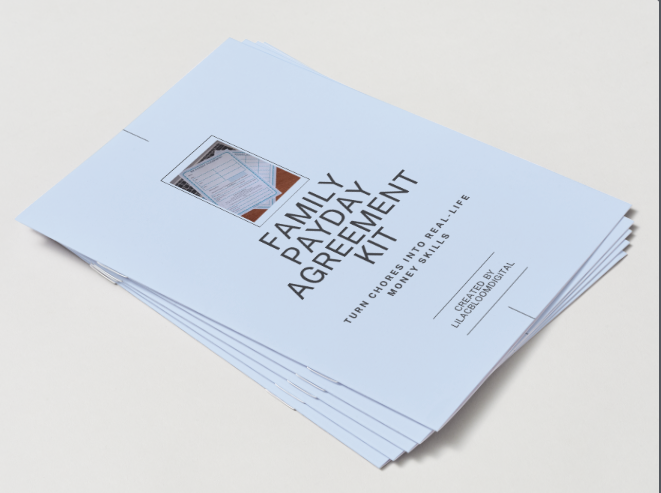
Family Payday Agreement Kit
Limited offer — discounted access available for a short time only. Once spots are filled, the price increases. Start your child’s financial literacy journey today.
Turn everyday chores into real-life money skills with the Family Payday Agreement Kit. This simple, printable system helps kids earn, save, and manage money while building responsibility — without nagging or arguments.
🧠 Final Verdict: Allowance vs Chores
So… what actually works?
👉 Not allowance alone
👉 Not chores alone
✔ A simple system that combines both
Because the goal isn’t just giving kids money…
It’s teaching them:
- How to earn
- How to manage
- How to make smart choices