
Want to teach your child how to save money, stay motivated, and actually reach their goals?
It starts with one simple skill: goal setting.
The problem? Most kids don’t struggle with saving money because they lack discipline — they struggle because they don’t have a clear plan.
That’s where SMART goals come in.
In this guide, you’ll learn how to teach your child to set and achieve their first financial goal using a simple, real-life system that actually works.

🎯 What Are SMART Goals for Kids?

SMART goals help children turn a vague wish into a clear, achievable plan.
Instead of:
“I want a toy”
They learn to say:
“I want to save $20 for a toy in 4 weeks”
This small shift builds:
- Confidence
- Patience
- Decision-making skills
- Real-life money habits
In your free guide, , this is explained simply as turning a goal into something Specific, Measurable, Achievable, Relevant, and Time-bound (see page 9).
🚨 Why Most Kids Struggle With Saving Money
If your child:
- Spends money as soon as they get it
- Constantly asks for new things
- Loses interest in saving
You’re not alone.
As explained in your guide (page 6), kids struggle because:
- They don’t understand how money works
- They don’t have a clear goal
- They don’t have a system to follow
👉 The solution isn’t more rules — it’s giving them a goal with a plan.
🪜 Step-by-Step: How to Teach SMART Goals to Kids
Step 1: Choose a Simple Goal
Start small and exciting.
Examples:
- $10–$20 toy
- Book or game
- Special outing
👉 Tip: Small wins build confidence fast.
Step 2: Make It SMART (Simple Version)
Use this framework:
- Specific → What exactly do they want?
- Measurable → How much does it cost?
- Achievable → Can they realistically earn it?
- Relevant → Do they actually want it?
- Time-bound → When do they want it?
📌 Example from your guide (page 9):
$20 soccer ball in 4 weeks = $5 per week
Step 3: Break It Into Weekly Steps
This is where most parents get stuck — but it’s the most important part.
From your guide (page 12):
- Total ÷ Weeks = Weekly savings
- Example: $20 ÷ 4 = $5 per week
Now your child knows exactly what to do each week.
Step 4: Create an Earning Plan
Ask:
“How will you earn your $5 each week?”
Options:
- Allowance
- Extra chores
- Small jobs
Example:
- $2 allowance + $3 chores = $5/week
Step 5: Track Progress Visually
Kids stay motivated when they can see progress.
Use:
- A savings jar
- A chart
- A printable tracker
Your free guide includes:
- SMART goal worksheet (page 18)
- Savings tracker (page 19)
- “If I get stuck” reflection page (page 20)
Step 6: Celebrate Milestones
Don’t wait until the end.
Celebrate:
- First week completed
- Halfway point
- Goal achieved
👉 This builds motivation and confidence.
💡 The Real Lesson Behind SMART Goals
This isn’t just about saving for a toy.
As highlighted in your guide (page 14):
Kids learn “I can set a goal and achieve it.”
That’s a lifelong skill.
📥 FREE DOWNLOAD: SMART Goals for Kids Guide
Ready to put this into action?
Download your free guide:
👉 The $0–$20 Savings Plan for Kids: Teach Goal Setting in 5 Simple Steps
Inside, you’ll get:
- Step-by-step goal setting system
- Printable SMART worksheet
- Savings tracker
- Simple weekly plan
✔ Takes under 10 minutes to start
✔ Works with or without an allowance
✔ Designed for busy parents
🚀 Want to Make This Consistent? (Next Step)
Here’s the truth…
Most kids don’t fail because they can’t set goals.
They fail because there’s no consistent system.
As your guide explains (page 21):
Without a system, goals get forgotten and money gets spent
👉 That’s where the Family Payday Agreement Kit comes in
It helps you:
- Turn chores into structured income
- Create a weekly payday system
- Stop constant asking for money
- Build real-world money habits
The System:
Work → Earn → Payday → Split → Save → Grow
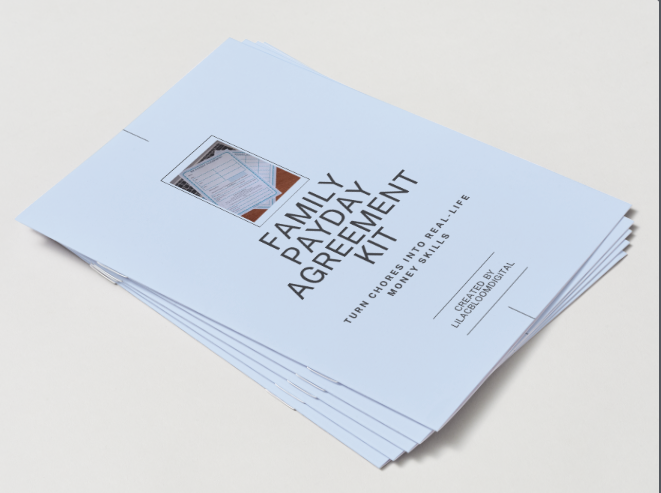
Family Payday Agreement Kit
Limited offer — discounted access available for a short time only. Once spots are filled, the price increases. Start your child’s financial literacy journey today.
Turn everyday chores into real-life money skills with the Family Payday Agreement Kit. This simple, printable system helps kids earn, save, and manage money while building responsibility — without nagging or arguments.
🧠 Final Thoughts
Teaching kids SMART goals is one of the simplest ways to build financial confidence early.
You don’t need:
- A big budget
- A perfect system
- Financial expertise
You just need:
✔ A clear goal
✔ A simple plan
✔ Consistency
Start small. Stay consistent. Watch their confidence grow.