
We’ve all been there: the endless cycle of nagging, the “I’ll do it later” excuses, and the frustration of feeling like a broken record when it comes to household responsibilities. If you are looking for a simple, effective way to transform chores from a point of contention into a valuable life lesson, it’s time to introduce a Payday Agreement.
At Lilacbloomdigital, we believe that financial literacy starts with understanding the connection between effort and reward. By moving away from “nagging” and toward “earning,” you empower your children to take ownership of their roles in the family.
Why a Payday Agreement is Essential for a New Allowance

When you first introduce an allowance, it can be tempting to just hand over a set amount of cash every week. However, without a clear structure, this often leads to a sense of entitlement rather than responsibility. Here is why a formal agreement is a game-changer:
- Sets Clear Expectations: It defines exactly what “success” looks like by listing specific jobs to be completed.
- Introduces the “Work-Reward” Cycle: Kids learn that money doesn’t just appear; it is earned through consistent effort.
- Eliminates Arguments: Because the terms are signed and agreed upon, there is no room for debate when jobs aren’t finished—the “paycheck” simply isn’t earned.
- Normalizes Financial “Adulting”: By including real-world concepts like taxes (10%) right from the start, children aren’t shocked by these realities later in life.
How to Implement Your Payday Agreement
Using our Payday Agreement template, you can set up a stress-free system in four simple steps:
- Define the Roles: Sit down with your child and choose three specific “jobs” they are responsible for each week.
- Calculate the Pay: Determine a weekly pay amount. Once decided, use the template to calculate a 10% Tax. This introduces the concept that a portion of our earnings goes back to the community or “the house”.
- Establish the Terms and Conditions: Use the agreement to decide how the “Remaining Pay” will be divided between Saving, Spending, and Giving jars.
- Seal the Deal: Have both the parent and child sign the document. This physical signature creates a sense of pride and formalizes their commitment.
Track Success with the Chore Chart Scoreboard
An agreement is only as good as its follow-through. To keep the momentum going, pair your agreement with a Chore Chart Scoreboard. This visual 10-week tracker allows kids to see their progress in real-time, providing the motivation they need to stay accountable without you needing to remind them every five minutes.
Ready to Upgrade Your System?
The Family Payday Agreement Kit is the essential starting point for any family looking to end the chore wars once and for all. It’s a simple and effective money management system that lays the foundations for your’s child’s financial house.
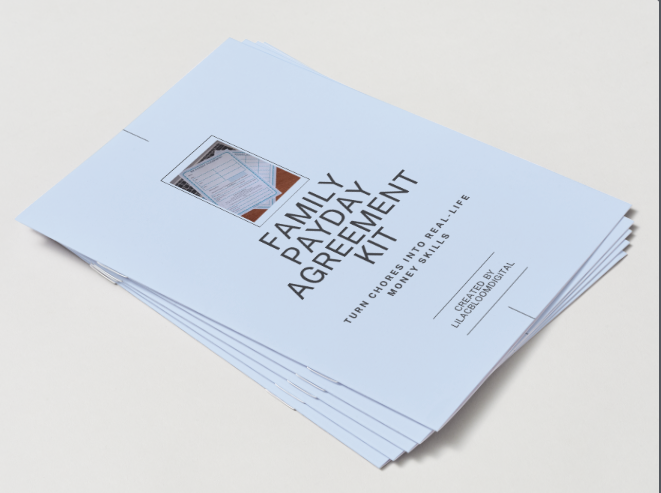
Family Payday Agreement Kit
Limited offer — discounted access available for a short time only. Once spots are filled, the price increases. Start your child’s financial literacy journey today.
Turn everyday chores into real-life money skills with the Family Payday Agreement Kit. This simple, printable system helps kids earn, save, and manage money while building responsibility — without nagging or arguments.
However, if you want to dive deeper into goal setting and long-term planning, The Allowance Blueprint System offer includes
- Parent Playbook – Parental guide to guiding kids to develop money management skills and understanding and implementation of money management system and How-To Videos.
- Kids Workbook – Worksheet that reflect developing and understanding of each section of money management system tax, giving, spending and saving and the Why? behind them.
- Bonus: Family Payday Agreement Kit -The kit introduces step by step of introducing the concepts of earning through an allowance and the money management system need.
- Bonus: Allowance Tracker Spreadsheet: The essential spreadsheet for your kids to track their incoming income and outgoing expenses, tracking savings goals and what am I current worth.