

Want your kids to be more independent—but not sure where to start?
Most parents either:
- Do too much for their kids
- Or expect too much too soon
The result? Frustration on both sides.
The key isn’t doing more—it’s giving your child the right responsibilities at the right age.
In this guide, you’ll learn:
- What responsibilities are appropriate for each age
- How to build independence without overwhelm
- How responsibilities connect to real-life skills (including money habits)
Why Responsibilities Matter for Kids
Giving kids responsibilities isn’t about chores—it’s about building life skills.
Research shows that when children are given age-appropriate tasks, they develop:
- Confidence
- Problem-solving skills
- Responsibility
- Independence (Child Development Institute)
They begin to think:
👉 “I can do this myself.”
And that belief carries into adulthood.
The Secret to Raising Independent Kids
Independence isn’t taught in one moment—it’s built over time.
✔ Start small
✔ Be consistent
✔ Increase responsibility gradually
Children learn best when tasks:
- Match their ability
- Feel achievable
- Are repeated consistently
Age-Appropriate Responsibilities by Stage
Ages 2–4: Building Confidence Through Small Tasks
At this stage, kids want to help—even if it’s messy.
What They Can Do
- Pack away toys
- Help wipe surfaces
- Carry items to the laundry
- Feed pets (with help)
👉 Focus: Participation, not perfection
Young children build independence by doing simple tasks and feeling like they contribute to the family. (County Place Early Learning)
Ages 5–7: Learning Routine & Responsibility
This is where habits begin.
What They Can Do
- Make their bed (basic)
- Set the table
- Pack school bags
- Help with simple meals
👉 Focus: Routine + consistency
At this age, children begin understanding responsibility and consequences of actions. (Help Me Grow Utah)
Ages 8–12: Building Real-Life Skills
This is your prime teaching window.
What They Can Do
- Manage morning routines
- Do basic laundry tasks
- Help cook meals
- Organise their space
👉 Focus: Ownership + independence
Children at this stage can take on more responsibility and begin managing tasks more independently. (Child Development Institute)
Ages 13–18: Preparing for Real Life
Teen years = transition to adulthood.
What They Can Do
- Manage money (budgeting, saving)
- Cook meals independently
- Manage schedules
- Take responsibility for commitments
👉 Focus: Decision-making + accountability
Teen independence involves making decisions, taking responsibility, and preparing for adult life. (Raising Children Network)
How to Introduce Responsibilities (Without Power Struggles)
Most parents struggle here.
1. Start Small
Don’t overwhelm—add one responsibility at a time.
2. Show First, Then Step Back
Do it together → then let them try.
3. Focus on Effort (Not Perfection)
It won’t look how you’d do it—and that’s okay.
4. Use Systems (Not Nagging)
- Checklists
- Routines
- Visual reminders
How Responsibilities Connect to Money Skills
Here’s what most parenting advice misses:
👉 Responsibilities are the foundation of financial literacy.
When kids:
- Complete tasks
- Earn money (allowance or not)
- Learn to manage it
They develop real-world skills like:
- Work ethic
- Delayed gratification
- Decision-making
FREE DOWNLOAD: Age-Appropriate Chore + Goal System
Want a simple system to implement this?
👉 Download your FREE “Mastering Age-Appropriate Chores Blueprint”
Inside:
- Done-for-you chore ideas by age
- Printable structure for routines
- Simple way to introduce responsibility
Ready to Take It Further?
If you want to connect responsibilities with real money skills:
👉 The Family Payday Agreement Kit helps you:
- Turn chores into structured earning
- Teach saving, spending, and giving
- Create clear expectations (no arguments)
✔ Perfect for ages 5–12
✔ Builds independence + financial literacy
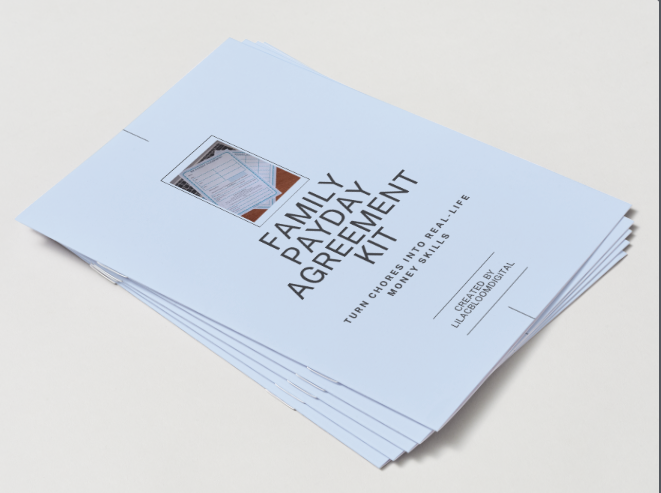
Family Payday Agreement Kit
Limited offer — discounted access available for a short time only. Once spots are filled, the price increases. Start your child’s financial literacy journey today.
Turn everyday chores into real-life money skills with the Family Payday Agreement Kit. This simple, printable system helps kids earn, save, and manage money while building responsibility — without nagging or arguments.
Common Mistakes Parents Make
Avoid these:
❌ Doing everything for your child
❌ Expecting perfection too early
❌ Giving too many responsibilities at once
❌ Not being consistent
Final Thoughts
You don’t need a perfect system.
You just need a progressive one.
Start small → stay consistent → build over time.
Because independence isn’t taught in one lesson—
it’s built through everyday life.
👉 Start with your FREE Chore Blueprint
👉 Then upgrade to the Family Payday Agreement Kit to connect responsibility with money skills