
Disclaimer: This post contains an affiliate link. If you purchase the book through this link, I may earn a small commission at no extra cost to you.
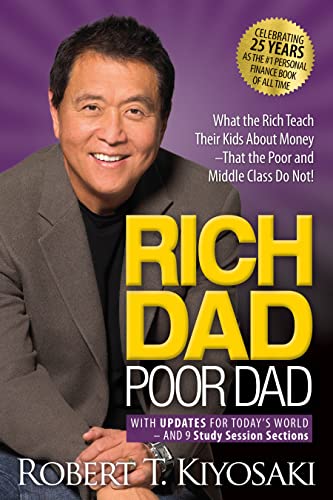
“Rich Dad Poor Dad” by Robert Kiyosaki wasn’t just another book; it was a profound financial wake-up call. It completely shifted my perspective on money, not just for myself but for how I approach teaching my children about wealth creation.
Before reading this book, I, like many, believed that working hard was the sole key to financial success. I focused on climbing the corporate ladder, chasing that elusive “security” of a stable paycheck—the traditional path my educated, well-respected schoolteacher “poor dad” emphasized. However, Kiyosaki’s powerful words resonated deeply: “Work to learn – don’t work for money.” He brilliantly contrasts my poor dad’s advice with that of his “rich dad,” a successful entrepreneur who focused on building assets that generate income.
The Essential Paradigm Shift: Assets vs. Liabilities

The most significant revelation in Rich Dad Poor Dad is the stark difference between an asset and a liability. Kiyosaki provides a simple, yet world-changing definition: An asset is anything that puts money in your pocket, and a liability is anything that takes money out.
This simple concept clarified the fundamental rule of wealth-building for me. The book clearly outlined the importance of understanding money, especially the crucial aspect of utilizing your assets to pay for your liabilities—not your hard-earned income. The goal is to build a strong asset column that generates cash flow sufficient to cover your expenses, thereby liberating you from the constant pressure of the monthly paycheck.
The Practical Application: Cashflow and Investing
Beyond the theory, the book led me directly to the practical application of these principles, specifically through the Cashflow game. This innovative educational tool, mentioned by Kiyosaki, was a true game-changer. It forced me to put the asset-building concepts into action and truly internalize the mechanics of building a passive cash flow stream.
This exposure inspired me to look further into the world of investing, moving beyond the safety of a 9-to-5 job and exploring real estate, stocks, and business opportunities. It also reinforced my belief that paying for financial education—not just traditional schooling—is the key to long-term success for both myself and my children.
The Benefits of Robert Kiyosaki’s Bestseller
Rich Dad Poor Dad is a foundational text for anyone seeking financial literacy. Here are some key benefits you will gain from reading it:
- Re-evaluates Traditional Education: It challenges the old notion that a high-paying job is the ultimate form of financial security, encouraging readers to prioritize learning how money works over simply earning money.
- Demystifies Financial Jargon: Kiyosaki breaks down complex financial concepts like cash flow, assets, and liabilities into easily digestible language, making them accessible to everyone.
- Empowers Entrepreneurial Thinking: The book fosters a mindset of seeking opportunity and innovation, encouraging readers to take calculated risks rather than relying on an employer for security.
- A Call to Action: It’s not just theory; it’s an urgent call to take control of your financial life and start building a future where your money works for you.
5 Key Learnings That Changed My Life
To solidify the lessons from the book, here are five essential takeaways that have had the greatest impact on my financial journey:
- Know the Difference Between an Asset and a Liability: The wealthy acquire assets (things that generate income); the poor and middle class acquire liabilities (things that cost money) that they think are assets.
- Financial Literacy is Non-Negotiable: Formal education teaches you how to get a job; financial education teaches you how to keep and multiply your money. You must learn accounting, investing, and market laws.
- Mindset and Overcoming Fear: The journey to wealth is blocked by fear, cynicism, laziness, bad habits, and arrogance. You must cultivate a strong mindset, seek opportunities, and take calculated risks to succeed.
- The Rich Work Less and Earn More with Corporations: Understanding the history of taxes and the legal structure of corporations reveals how the rich use business entities for tax advantages and asset protection that are unavailable to employees.
- Work to Learn, Not to Earn: Seek jobs or opportunities that teach you a new skill (like sales, communication, or marketing) rather than solely focusing on the size of the paycheck. Skills are the true assets.
Ready to Start Your Journey?
If you’re looking to break free from the traditional “rat race” and build a more fulfilling financial future, Rich Dad Poor Dad is the foundational read that can change your life.
Step 1: Get the Book That Started It All 📚
Don’t wait to gain the financial knowledge that can redefine your future. Rich Dad Poor Dad is the essential first investment in your journey toward financial freedom.
Click below to grab the bestseller that challenges everything you thought you knew about money:
Step 2: Start Their Journey Now with The Allowance Blueprint 💰
Inspired by the lessons of financial education, ensure your children start with the right system. The Allowance Blueprint is your simple, step-by-step guide to setting up an effective, no-fuss money management system for your kids, teaching them the crucial balance of saving, spending, and giving right from the start.